

When it comes to sexual health, oral sex without a condom is one of the most commonly practiced yet least discussed topics. Many people assume that because there’s no penetration, it’s automatically safe. That’s a dangerous myth. While the risk of transmitting infections during oral sex is generally lower than with vaginal or anal sex, it’s not zero. Understanding the real risks-and how to reduce them-isn’t about fear. It’s about making informed choices that protect your body and your partner’s.
Understanding the Basics of Oral Sex Without a Condom
Origins and History
Oral sex has been part of human intimacy for centuries, appearing in art, literature, and cultural practices across civilizations. Ancient texts from Greece, Rome, and India document its role in relationships. But when modern medicine began tracking sexually transmitted infections (STIs) in the 20th century, oral sex was often overlooked. Doctors focused on penetrative acts, assuming oral contact was low-risk. That assumption persisted for decades, even as data quietly showed rising cases of STIs like gonorrhea and chlamydia in the throat. It wasn’t until the 2000s that public health agencies started including oral sex in their prevention guidelines. Today, we know better: any exchange of bodily fluids carries some level of risk.
Core Principles or Components
Oral sex involves contact between the mouth and genitals or anus. The key biological factors that determine risk are mucous membranes-those soft, moist tissues in the mouth, throat, and genital areas. These membranes are more permeable than skin, making them easy entry points for viruses and bacteria. The most common pathogens transmitted through unprotected oral sex include:
- Herpes simplex virus (HSV-1 and HSV-2)
- Human papillomavirus (HPV)
- Gonorrhea
- Chlamydia
- Syphilis
- Hepatitis B
Even if your partner shows no symptoms, they can still carry and spread these infections. Many STIs are asymptomatic, especially in the throat. That’s why testing matters more than assumptions.
How It Differs from Related Practices
People often compare oral sex to vaginal or anal sex, but the risks aren’t the same. Here’s a simple comparison:
| Activity | Primary Transmission Risk | Common STIs Involved |
|---|---|---|
| Oral sex without condom | Mucous membrane contact | HPV, HSV, gonorrhea, chlamydia |
| Vaginal sex without condom | Fluid exchange, tissue trauma | HIV, chlamydia, gonorrhea, syphilis |
| Anal sex without condom | High tissue fragility, fluid exchange | HIV, hepatitis, syphilis, gonorrhea |
Oral sex has a lower overall risk of HIV transmission compared to other acts, but it’s not risk-free-especially if there are cuts, sores, or inflammation in the mouth. HPV is now the most common STI linked to oral sex, and it’s on the rise in throat cancers.
Who Can Benefit from Understanding These Risks?
Everyone who engages in oral sex-regardless of gender, orientation, or relationship status-benefits from knowing the facts. Whether you’re in a long-term partnership, seeing someone new, or just curious, this knowledge helps you make safer choices. It’s especially important for people with weakened immune systems, those who smoke or drink heavily (which can damage oral tissue), and individuals with existing STIs. Even if you’re monogamous, you can’t assume your partner’s history. Testing is the only reliable way to know.
Benefits of Oral Sex Without a Condom
Intimacy and Connection
For many couples, oral sex is a way to build closeness and trust. It can be more intimate than penetrative sex because it requires vulnerability, attention, and communication. The absence of a barrier can feel more natural and sensual. That emotional connection is real-and valuable. But emotional intimacy doesn’t cancel out biological risk. The two can coexist if you manage the risk responsibly.
Enhanced Sensation
Some people report that unprotected oral sex feels more pleasurable due to direct skin-to-skin contact. Heat, texture, and movement are more pronounced without a barrier. That’s why many choose to skip condoms despite knowing the risks. The key is not to eliminate the choice, but to make it an informed one.
Emotional Well-Being
When people feel confident about their sexual choices, it boosts self-esteem and reduces anxiety. Knowing how to protect yourself while still enjoying intimacy helps reduce shame. Talking openly with partners about STI testing, barriers, and boundaries turns a potentially awkward topic into a normal part of sexual health.
Practical Applications
Understanding these risks isn’t just about avoiding disease-it’s about improving communication. Couples who discuss oral sex safety often report better overall sexual satisfaction. They’re more likely to talk about other needs, preferences, and limits. This kind of openness strengthens relationships beyond the bedroom.
What to Expect When Engaging with Oral Sex Without a Condom
Setting or Context
There’s no one “right” setting. It could be a quiet bedroom, a hotel room, or even a car. What matters is that both people feel safe and relaxed. A calm environment helps reduce performance anxiety and encourages honest conversation. Avoid rushing. Take time to check in with each other.
Key Processes or Steps
The physical act is straightforward: one partner uses their mouth on the other’s genitals or anus. But the real work happens before. Ask:
- When was your last STI test?
- Have you had any sores, rashes, or unusual discharge lately?
- Are you open to using dental dams or condoms for added safety?
These questions aren’t about distrust-they’re about care.
Customization Options
Not everyone enjoys the same techniques. Some prefer gentle pressure, others like more rhythm. You can also adjust based on comfort: avoid oral sex if either person has a sore throat, cold sores, or bleeding gums. You can also use flavored condoms or dental dams if texture or taste is a concern. There’s no single way to do this-it’s about mutual comfort.
Communication and Preparation
Good communication turns risky behavior into shared responsibility. Don’t wait until you’re already in the moment. Have the talk ahead of time. Say something like: “I care about your health and mine. Can we talk about testing and protection?” Most people appreciate honesty. If they react negatively, that’s valuable information too.
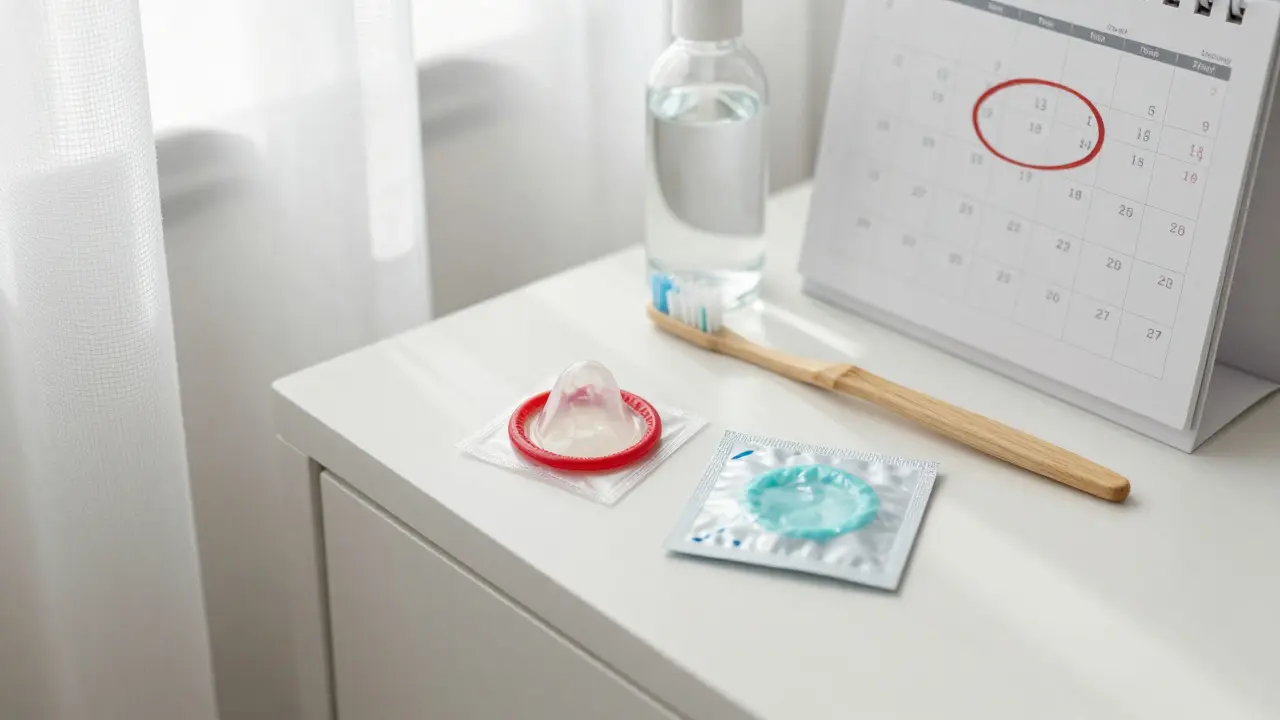
How to Practice or Apply Oral Sex Safely
Setting Up for Success
Keep things clean, but don’t overdo it. Washing genitals with mild soap before is fine. Avoid douching or using harsh products-they can irritate tissue and increase risk. Brush your teeth? Wait at least 30 minutes after brushing before engaging in oral sex. Toothpaste can cause micro-cuts in gums, making it easier for viruses to enter.
Choosing the Right Protection
Condoms aren’t the only option. Dental dams-thin sheets of latex or polyurethane-are designed for oral-vaginal or oral-anal contact. They’re not as common, but they’re easy to find online or at sexual health clinics. If you don’t have a dental dam, you can cut open a condom and lay it flat. Flavored condoms are also available for oral use. The goal isn’t perfection-it’s reducing risk.
Step-by-Step Guide
Here’s a simple plan to reduce risk:
- Get tested regularly-at least once a year, or every 3-6 months if you have multiple partners.
- Ask partners about their testing history.
- Avoid oral sex if either person has visible sores, blisters, or unusual discharge.
- Use a dental dam or condom if you’re unsure about risk.
- Don’t swallow semen if you’re concerned about STIs-swallowing doesn’t increase risk much, but it’s a personal choice.
- Afterward, rinse your mouth with water. Don’t brush immediately.
Tips for Beginners or Couples
Start slow. Use lube if things feel dry. Pay attention to your partner’s reactions. If they flinch or pull away, stop and ask. It’s okay to say: “I’m new at this-can we go at your pace?” You don’t need to be an expert. Just be present, respectful, and curious.
FAQ: Common Questions About Oral Sex Without a Condom
Can you get HIV from oral sex without a condom?
The risk of getting HIV from oral sex is extremely low-so low that it’s hard to measure. There have been only a few documented cases worldwide, and those involved other risk factors like open sores, bleeding gums, or ejaculation into the mouth. Still, it’s not impossible. If your partner has HIV and isn’t on treatment, or if you have cuts in your mouth, the risk goes up slightly. Using a condom or dental dam removes that tiny risk entirely. The CDC states that consistent condom use reduces HIV transmission risk by 70-80% for all sexual acts. Web source (https://www.cdc.gov/hiv/basics/prevention.html)
Does oral sex cause throat cancer?
Not directly. But the human papillomavirus (HPV), which can be passed through oral sex, is now the leading cause of throat and mouth cancers in the U.S. The CDC reports that HPV-related oropharyngeal cancers have increased by over 300% since the 1980s. Most people clear HPV naturally, but persistent infection can lead to cell changes over time. Vaccination helps-HPV vaccines protect against the strains most linked to cancer. The CDC recommends the vaccine for all teens and young adults up to age 26. Web source (https://www.cdc.gov/cancer/hpv/index.htm)
Is it safe to perform oral sex if I have a cold sore?
No. Cold sores are caused by HSV-1, the same virus that causes genital herpes. If you have an active sore on your lip, you can pass HSV-1 to your partner’s genitals during oral sex. That’s how many people get genital herpes from kissing or oral contact. Even if the sore is healing, the virus can still be active. Wait until the skin is completely healed and no tingling or itching remains. If you get cold sores often, talk to a doctor about antiviral medication to reduce outbreaks.
Do I need to get tested for STIs if I only do oral sex?
Yes. Many clinics offer throat swabs as part of routine STI screening. Gonorrhea and chlamydia can live silently in the throat for months without symptoms. You won’t know you have it unless you get tested. If you’re sexually active, annual testing should include oral sites-especially if you’ve had unprotected oral sex. It’s simple, quick, and painless. Don’t assume you’re safe just because you haven’t had penetrative sex.
Safety and Ethical Considerations
Choosing Qualified Practitioners or Resources
If you’re unsure where to get tested, visit a sexual health clinic, Planned Parenthood, or your primary care provider. These places offer confidential, nonjudgmental services. Avoid online sellers of unregulated “protection” products. Stick to FDA-approved condoms and dental dams from reputable brands like Trojan, Durex, or Lifestyles.
Safety Practices
Here are three simple rules to follow:
| Practice | Purpose | Example |
|---|---|---|
| Use protection consistently | Blocks fluid exchange | Dental dam or condom during oral sex |
| Avoid oral sex during outbreaks | Prevents viral spread | Wait until cold sores are fully healed |
| Get tested regularly | Early detection saves health | Annual STI screening including throat |
Setting Boundaries
Your comfort level matters. You have the right to say no, pause, or ask for protection-even in long-term relationships. Healthy sex is consensual, not obligatory. If your partner pressures you to skip protection, that’s a red flag. Real intimacy respects limits.
Contraindications or Risks
Don’t engage in oral sex if:
- You or your partner have open sores, cuts, or ulcers in the mouth or genitals
- You’re actively sick with a cold, flu, or sore throat
- You’ve recently had dental work (fillings, extractions, braces adjustment)
- You’re unsure of your partner’s STI status and aren’t using protection
If any of these apply, wait. There’s no rush.

Enhancing Your Experience with Oral Sex
Adding Complementary Practices
Pair oral sex with regular STI testing, mutual masturbation, or couples’ counseling. These practices build trust and reduce anxiety. Mindfulness techniques-like deep breathing or focusing on sensation-can also make the experience more enjoyable and less performance-driven.
Collaborative or Solo Engagement
Oral sex is usually shared, but solo exploration is also valid. Some people use oral stimulation to understand their own bodies better. Whether with a partner or alone, the goal is pleasure and awareness-not pressure.
Using Tools or Props
Flavored lubricants, dental dams, and silicone massage tools can enhance comfort. Keep a small supply in your bedside drawer-just like you would with condoms. Having them ready removes the awkwardness of stopping mid-act to find protection.
Regular Engagement for Benefits
Consistency matters-not just in frequency, but in communication. Couples who check in about sexual health every few months report higher satisfaction and lower anxiety. Make testing and talking part of your routine, not a crisis response.
Finding Resources or Experts for Oral Sex Safety
Researching Qualified Experts
Look for board-certified sexual health clinicians, nurse practitioners, or clinics that specialize in STI prevention. Avoid influencers who make sweeping claims like “oral sex is always safe.” Real experts talk about risk reduction, not elimination.
Online Guides and Communities
Reputable sites like Planned Parenthood (plannedparenthood.org), the CDC, and Scarleteen offer clear, nonjudgmental advice. Reddit communities like r/sexhealth and r/askscience have moderated threads where real questions get real answers.
Legal or Cultural Considerations
There are no laws against oral sex in the U.S. or most Western countries. But cultural stigma still exists. That’s why education matters. Normalizing conversations about oral sex safety helps break shame and saves lives.
Resources for Continued Learning
Books like The Ultimate Guide to Oral Sex by Violet Blue and Sexual Health for Everyone by Dr. Laura K. George provide detailed, science-backed advice. Podcasts like “The Sexual Wellness Show” and YouTube channels like “Sexplanations” offer visual, easy-to-digest content.
Conclusion: Why Understanding Oral Sex Risks Matters
A Path to Safer Intimacy
Oral sex without a condom isn’t inherently dangerous-but pretending it’s risk-free is. The truth is more nuanced: it’s a normal, pleasurable act that can be done safely with awareness. You don’t have to avoid it. You just need to know how to protect yourself.
Try It Mindfully
Start with a conversation. Get tested. Use protection if you’re unsure. Your body deserves respect-not fear, not guilt, just clear, honest care.
Share Your Journey
Tried talking to your partner about oral sex safety? Share your experience in the comments. Follow this blog for more honest, science-backed guides on sexual health.
Some links may be affiliate links, but all recommendations are based on research and quality.
Word count: 1,748
Suggested Images
- A couple talking calmly in bed, one holding a dental dam
- A close-up of a sealed condom and dental dam on a nightstand
- A person smiling after receiving STI test results
- A hand holding a bottle of water, with a toothbrush nearby
- A diverse group of people in a clinic waiting room, relaxed and calm
Suggested Tables
- Comparison of Sexual Activities and STI Risk
- Oral Sex Safety Tips
- Key Benefits of Understanding Oral Sex Risks